At the India AI Impact Summit 2026: Our Portfolio in Action

At Mozilla Ventures we talk a lot about investing in trustworthy AI. Last week at the India AI Impact Summit in New Delhi, five of our portfolio companies showed what that looks like in practice.
The summit was the fourth in a series of global AI convenings (following Bletchley Park, Seoul, and Paris) and the first held in the Global South. But the real story for us wasn’t the declarations or the $200 billion in pledges. It was watching founders we’ve backed step onto the world stage and do the work.
The Portfolio in Action
Credo AI
Navrina Singh had a standout week. She spoke on “Scaling Trusted AI: Global Practices, Local Impact,” making the case that the challenge has moved from building AI to verifying and governing it.
Credo announced a strategic partnership with G42, the Abu Dhabi-based AI group, to operationalize responsible AI governance across the Global South and Middle East. Separately, the team launched a Global AI Governance Insights Hub, an interactive platform for tracking AI policy, risk controls, and regulatory mapping, and co-published a Responsible AI Compendium with G42.
In her reflections from the summit, Navrina distilled six takeaways that I think capture the state of play perfectly. Two stood out to me. First: trust is both the bottleneck and the unlock. Organizations will only scale AI when they can demonstrate measurable risk management and lifecycle governance. Second: as AI becomes agentic, static oversight and manual checklists can’t keep up. Continuous monitoring, real-time policy enforcement, and AI governing AI will define the next era. That’s exactly the infrastructure Credo is building.
Adaption Labs
Sara Hooker was on panels throughout the week on AI safety, evaluation, and cross-cultural robustness, including a Day 5 session alongside speakers like Ananya Birla and Aadit Palicha. She shared why the future of AI must move beyond static systems toward adaptation across real-world contexts. She also sat for a great interview on NDTV that captured both the big questions and the fun of the week.
Adaption also hosted their own social gathering in Delhi, bringing together researchers, policymakers, founders, and builders. As the team reflected afterwards: a clear takeaway was that policy conversations are accelerating: India is engaging seriously with how to shape AI’s future, not just scale it.
Sara’s work on ensuring AI systems work reliably across languages and cultural contexts was perfectly at home at a summit that put Global South priorities center stage.
Fiddler AI
Krishna Gade attended with his team, hosting an intimate community event and joining the Leaders’ Plenary. At one of Mozilla’s events, Krishna spoke about AI trust and transparency, making the case that observability must precede autonomy, that agents need a control plane, and that compounding workflows raise the stakes for governance.
In his summit reflections, Krishna noted what struck him most: India isn’t asking “how do we win the AI race?” but rather how to make AI accessible at population scale, avoid concentration risk, and ensure AI empowers small businesses and citizens rather than just incumbents. Having already built population-scale digital public infrastructure with Aadhaar and UPI, India is now thinking about a common AI substrate: interoperable, identity-aware, and secure. As Krishna put it: if India embeds trust into that AI substrate, it could shape a third path in global AI governance.
Lelapa AI
Vukosi Marivate spoke at multiple sessions throughout the week, bringing the perspective of building AI rooted in and designed for African languages and communities. His panel on “Collaborating to Scale AI Adoption in the Global South” was a natural fit for Lelapa’s mission, making the case that meaningful AI adoption requires locally rooted models, not just translated ones. He also joined an ORF/SAIIA dinner on inclusive AI governance, exploring how AI can reflect the diversity of human experience across languages, cultures, and identities.
Separately, Vukosi was named as one of 40 global experts appointed to the UN’s new Independent International Scientific Panel on AI. Selected from over 2,600 applicants across 140 countries, the panel is the first fully independent scientific body dedicated to assessing AI’s real-world impact across economies and societies. It’s a signal of how seriously the world is now taking the kind of inclusive, multilingual AI work that Lelapa represents.
Holistic AI
Raj Bharat Patel joined a panel co-hosted by techUK and BSI on AI assurance: “From Principles to Proof.” Chaired by Sue Daley, with fellow panelists Natasha Crampton and Tim McGarr, the session explored how assurance and governance can be drivers of deployment rather than barriers to it, and how UK-India collaboration can move the field forward at pace. In his reflections, Raj shared how Holistic AI is leading on governance deployment and emerging best practice.
Investing in Trustworthy AI
That was the portfolio. Here’s the bigger picture.
Our colleague Linda Griffin captured the summit dynamics well in her policy blog readout: at Bletchley, open source AI was treated as a security risk; at Paris, the consensus began to shift; at Delhi, there was undeniable recognition that open source is central to the AI future. Mozilla President Mark Surman told Fortune that beyond the photo ops, there was real hunger from countries, companies, and communities to build AI that is open-source, sovereign, and culturally tailored. As Mark put it heading into the summit: open source AI is the path to both economic and digital sovereignty.
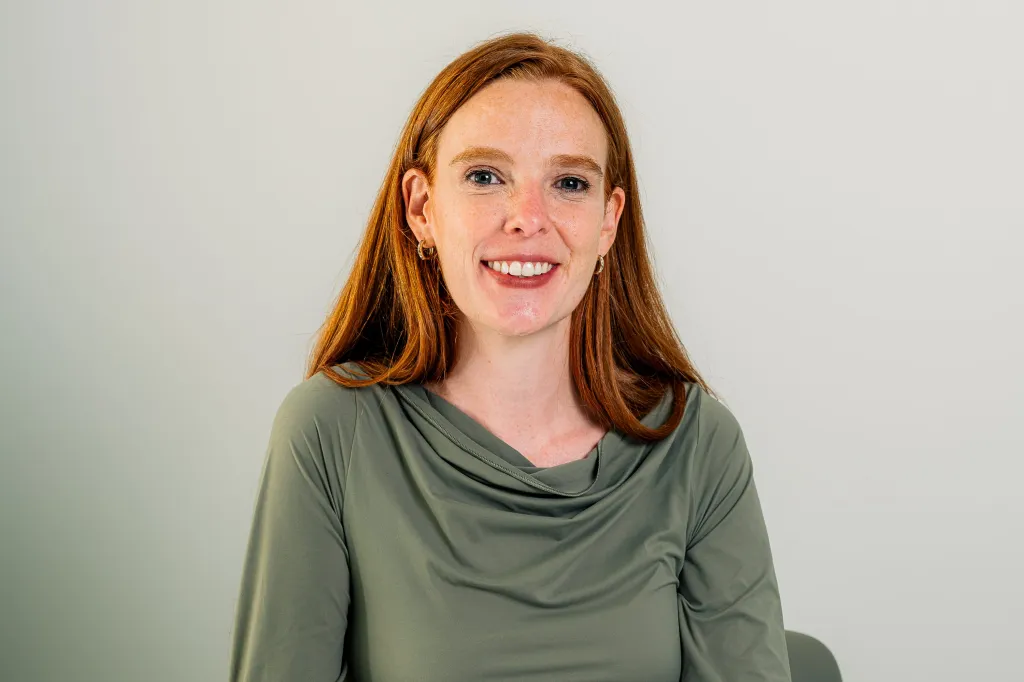
I joined a panel with AI Commons on “Capital Allocations as AI Governance”, making the case that where we deploy capital shapes the kind of AI ecosystem we get. If we invest exclusively in closed, proprietary systems, we get concentration and dependency. If we invest in open, trustworthy AI infrastructure, we get resilience, sovereignty, and systems people can actually inspect and govern.
Mozilla CTO Raffi Krikorian made the same argument in Rest of World during the summit, and it’s the thesis behind Mozilla’s commitment to open-source AI capability development.
That was the theory. Walking out of that session and watching our founders do the work all week, signing governance partnerships, building assurance frameworks, making the case for observability and adaptation in rooms that matter, that was the practice. The best argument for investing in trustworthy AI turned out to be the portfolio itself.